
 by
by The Old Way: Filmmaking as Logistics
Traditional filmmaking has never really been about creativity in the romantic sense — it’s about coordination. A single minute of finished footage might represent a location scout, a permit application, a fifteen-person crew, a lighting rig, a continuity supervisor making sure the coffee cup is in the same hand in every take, and a director who’s had four hours of sleep.
Every decision is physical and expensive to undo. You can’t “re-roll” a sunset.
That constraint is also the source of a huge amount of the medium’s power. When a director frames a shot, they’re making a hundred small choices — where the light falls, what’s just outside frame, how long to hold before cutting — and those choices come from a person who has a point of view. The friction of production is, paradoxically, part of what gives films their specificity.
The New Way: Filmmaking as Prompting (Sort Of)
AI video generation strips away almost all of that physical friction. Tools like Sora, Runway, Kling, and Veo let you describe a scene in text and get moving pixels back in minutes. No location, no crew, no weather delays.
But “no friction” doesn’t mean “no craft” — it means the craft moves somewhere else. Instead of blocking actors and setting up lights, the new skill is iterative description: learning how a model interprets “cinematic,” what camera-movement vocabulary it actually understands, how to chain shots so they stay visually consistent, and how to fix the six-fingered hand problem in post. It’s less like directing and more like art-directing a very literal, very fast, occasionally hallucinating collaborator.
What Genuinely Changes
1. Who gets to make something. A student with a strong idea and no budget can now produce something that looks expensive. That’s the single biggest shift — not quality, but access. The barrier moves from “can you raise $50,000” to “do you have a compelling idea and the patience to iterate.”
2. Where the time goes. Traditional production spends most of its time before the camera rolls (pre-production) and after it stops (post). AI generation compresses pre-production into prompt-writing, but it often expands post-production, because you’re generating dozens of variants and stitching, cleaning, and grading the ones that work.
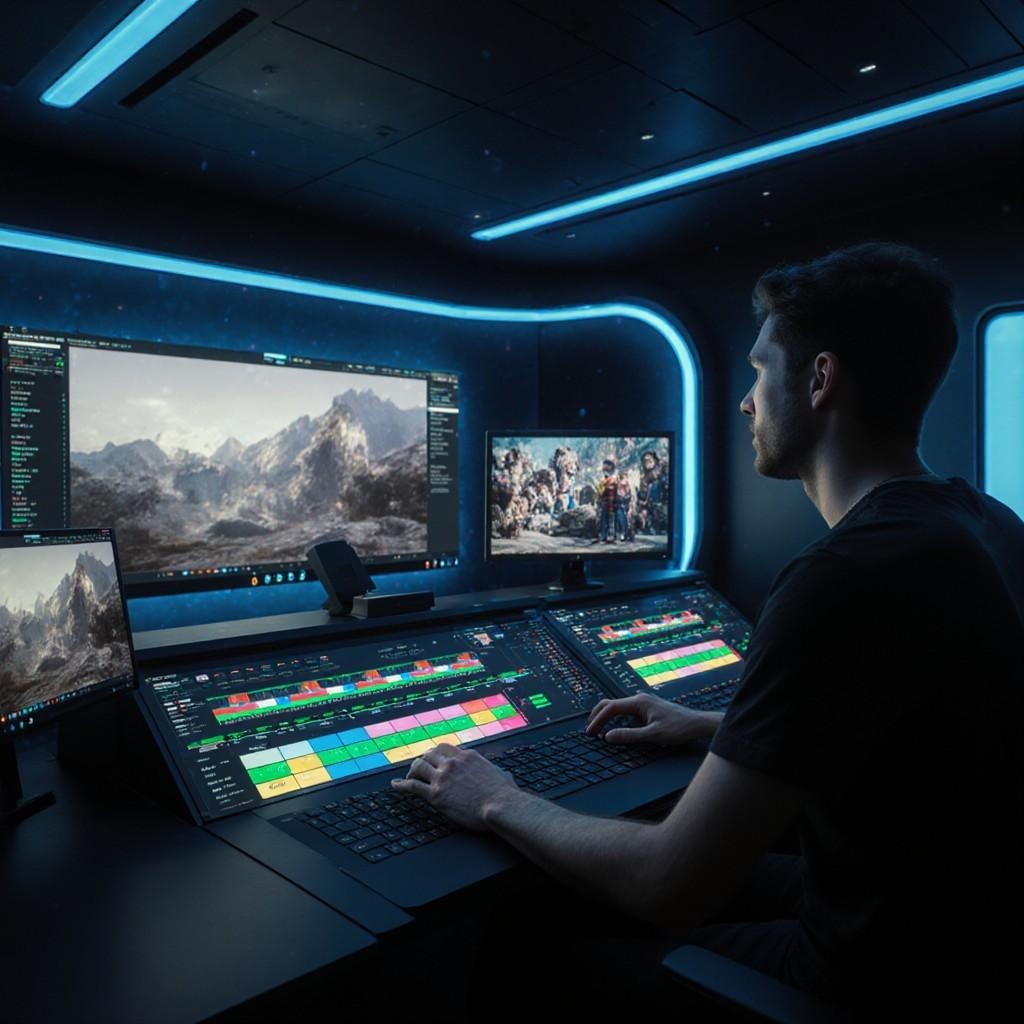
3. What “control” means. A cinematographer controls light with physical instruments. An AI filmmaker controls outcomes through language, reference images, and re-generation — a much blunter, more probabilistic form of control. You’re steering a current, not gripping a wheel.
4. Continuity and performance. This is where AI still visibly struggles. Human actors carry emotional through-lines across a scene; AI-generated characters can subtly drift in appearance, and subtle emotional beats — the kind that come from a real performer’s choices — are the hardest thing to synthesize convincingly.
Where the Two Worlds Are Already Merging
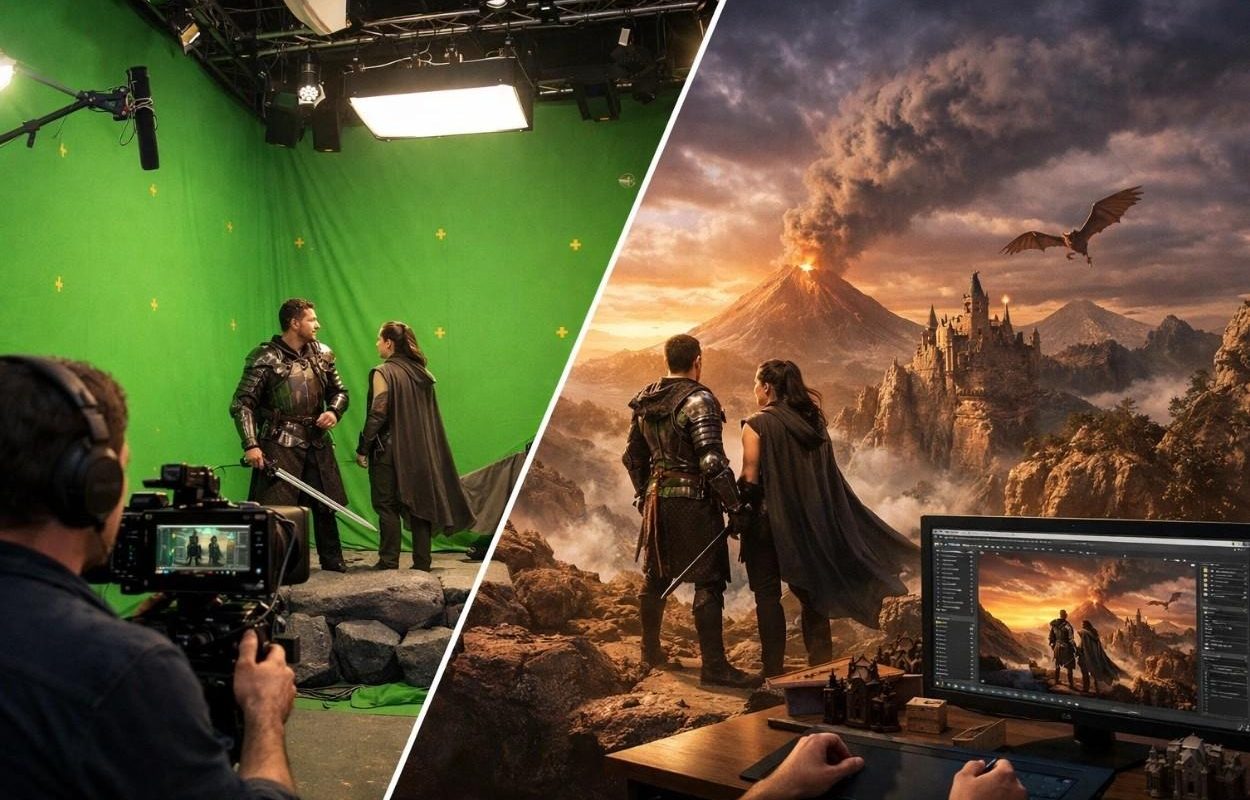
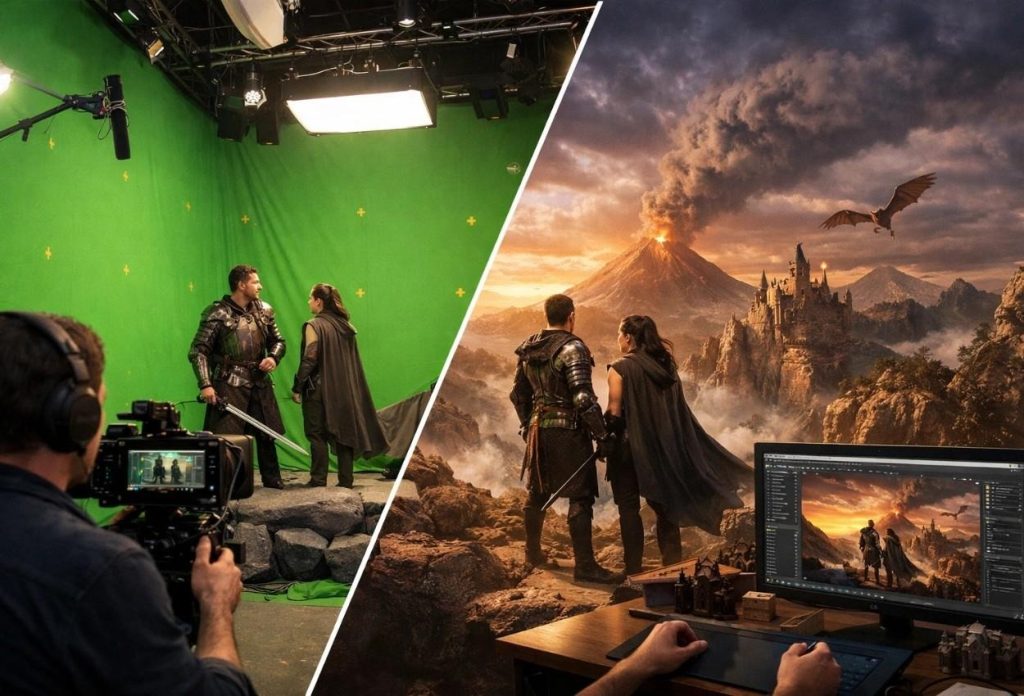
Visual effects have quietly been doing a version of this hybrid workflow for decades: a real performance on a green screen, transformed into something that never physically existed. AI generation is really just pushing that same idea further upstream — sometimes there’s no green screen and no performer at all, only a prompt.
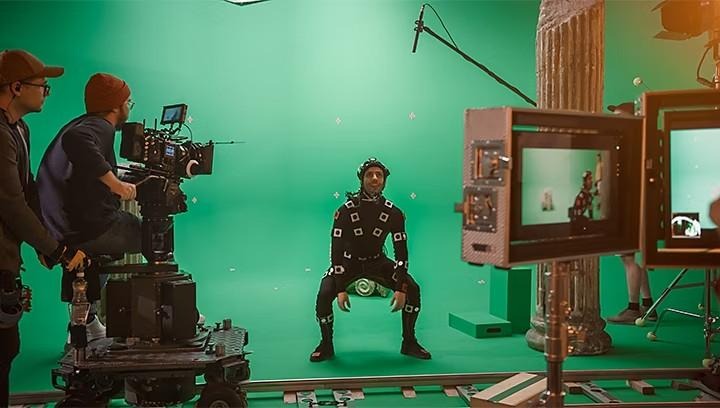
This is the honest middle ground: most “AI filmmaking” happening right now isn’t AI replacing a shoot — it’s AI replacing or augmenting the parts of post-production that used to require a VFX studio and months of rendering.
What Doesn’t Change
Underneath the tooling, storytelling fundamentals haven’t moved an inch. Pacing, tension, framing, why a scene matters emotionally — none of that is solved by better generation models. A gorgeous AI-generated shot with nothing to say is just an expensive-looking screensaver. The tools changed who can produce a technically impressive image. They have not changed what makes an audience feel something.
It’s also worth being honest about where AI video currently falls short: long-form narrative coherence, precise directorial control, and the kind of unrepeatable, imperfect texture that comes from real light hitting a real face. Traditional filmmaking’s “limitations” — cost, time, physical constraint — are often exactly what forces creative discipline. Remove the constraint entirely and you sometimes remove the discipline too.
So Which One “Wins”?
Wrong question. A more useful frame: traditional filmmaking is a production method; AI video generation is a new medium still figuring out its own grammar, the way early cinema had to figure out that a jump cut wasn’t a technical error. They’ll likely converge — expect hybrid workflows where AI handles previz, background plates, or crowd scenes, while human actors and cinematographers handle the moments that need a real face and a real decision behind the camera.
The camera used to be the great equalizer of the 20th century, turning storytelling from an oral tradition into a mass medium. AI generation might be doing something similar for the 21st — just don’t mistake “easier to produce” for “automatically good.” That part’s still on you.