
 by
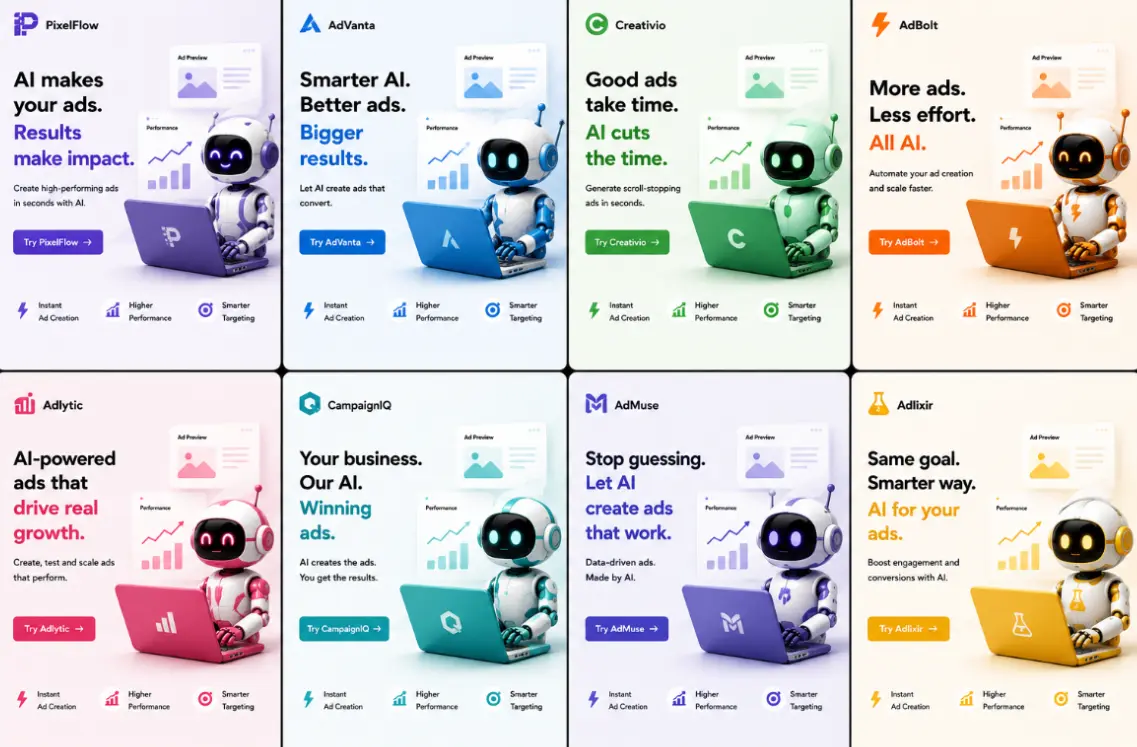
by Why do your AI creatives look like 4,000 others?
As a copywriter and motion artist, we’ve reviewed enough AI-generated ads over the past year and noticed a pattern.
Different brands. Different industries. Different objectives.
Yet somehow, a surprising amount of the work ends up looking and sounding the same.
The visuals move beautifully. The transitions are smooth. The copy is grammatically perfect. Everything feels polished. And yet, nothing feels memorable.
The easy conclusion is to blame AI. The harder and more accurate conclusion is that AI is often reflecting the quality of the direction it’s given.
1. You’re Prompting for Answers, Not Thinking
The first mistake happens before the prompt is even written. People ask AI for answers before they’ve done the thinking.
A prompt like:
“Create a social media ad for a skincare brand”
“Write a headline.”
“Create a video of rose blooming.”
Such prompts skip the most important part of the process: understanding the audience, the problem and what makes the brand worth paying attention to in the first place.
As creatives, we rarely start with execution. We start with questions. Who are we talking to? What are they feeling? Why should they care? AI can help generate ideas, but it can’t replace the strategic thinking that gives those ideas direction.
2. Generic Inputs Create Generic Outputs
If you’re feeding AI broad instructions with little context, it’ll fill in the blanks using patterns it’s seen thousands of times before. That’s why so much AI-generated work feels familiar.
A vague prompt doesn’t give AI room to be original, it gives it permission to be average. The more specific your inputs are, whether that’s customer insights, product details, audience behaviour, or campaign objectives, the more interesting the output becomes.
3. You’re Using the Same Prompts as Everyone Else
The rise of prompt templates hasn’t helped. Everyone is using variations of:
“Act like an award-winning copywriter”
“Create a reel that will go viral”
“Make it look premium yet minimalist”
Then wondering why their work resembles everyone else’s.
If thousands of people are starting with the same instructions, they’re bound to land in similar creative territory. Originality doesn’t come from copying someone else’s prompt framework. It comes from bringing your own perspective, observations and brand context into the process.
4. AI Has No Taste. You Do.
One thing AI doesn’t possess is taste.
As motion artists, we’ve all seen beautifully animated videos that leave absolutely no impression once they’re over. Great motion isn’t just movement, it’s movement with intent.
AI knows what’s common. It knows what exists. But it doesn’t know which idea is genuinely worth pursuing. It can’t tell whether a visual feels fresh or overdone, whether a headline is memorable or forgettable, or whether a concept deserves another round of exploration.
That’s still your job.
5. You’re Skipping the Reference Stage
Great creatives don’t appear out of nowhere.
Motion artists spend hours studying title sequences, ad films, editing styles, transitions, camera movements and storytelling techniques. Copywriters collect headlines, campaigns and messaging ideas that made them stop and pay attention.
Yet when people use AI, they often skip this stage entirely and jump straight to generation.
The strongest AI outputs usually come from people who bring references into the process. Inspiration boards, campaign examples, customer reviews, competitor research, visual styles, these inputs give AI something meaningful to work with instead of forcing it to guess.
6. One-Shot Prompting Is Killing Your Output
The first AI output is rarely the best one.
Yet many people generate a concept, skim through it and move on. Creative work has never worked that way. The strongest campaigns, scripts, visuals and headlines are usually the result of multiple rounds of refinement.
AI makes iteration easier than ever, but many users treat the first draft like the final answer. The teams getting standout results are constantly pushing ideas further, exploring alternative angles and improving what they’ve already generated.
7. You’re Asking AI to Create, Not Critique
Most users ask AI to generate ideas. Far fewer ask it to evaluate them.
Some of the most useful prompts aren’t “give me another version” but “what feels weak about this?” or “which idea is the least distinctive and why?”
As a copywriter, a huge part of the job is editing. As a motion artist, a huge part of the job is reviewing work frame by frame and deciding what needs to change.
8. Brand Voice Is Missing
Remove the logo from many AI-generated creatives and they could belong to almost any company.
That’s because AI defaults to a generic internet voice unless it’s taught otherwise.
The copy sounds polished but interchangeable. The visuals look impressive but could work for ten different brands. Everything feels professionally made, yet nothing feels distinctly yours.
Brand voice isn’t something you add at the end of the process. It’s what guides every creative decision from the start. Without it, even the most visually stunning AI-generated content risks blending into the sea of sameness.
The Real Problem Isn’t AI
The irony of the AI era is that the skills like taste, judgement, strategy, storytelling and creative direction, people thought would become less important, in fact have become even more valuable.
AI can generate visuals, write scripts, animate scenes and produce endless variations in minutes. The real challenge isn’t creating more. It’s creating something worth remembering.
Because at the end of the day, AI is only as original as the direction it’s given.