 by
by The De-Influencing Trap: Why Telling People What Not to Buy Became the Best Way to Sell
A hair serum. A viral hashtag. A creator holding the product up to the camera not to praise it, but to warn viewers away from it. That single gesture telling an audience not to buy something has generated over a billion views on TikTok since 2023 and quietly rewritten the rules of influencer marketing.
From #TikTokMadeMeBuyIt to #Deinfluencing
The de-influencing movement emerged in early 2023 as a direct reaction to years of “TikTok Made Me Buy It” hype cycles, where viral hauls and gifted-product unboxings pushed constant impulse purchases. Creators started doing the opposite: naming specific overhyped products, calling out brands for shady marketing, and telling followers to save their money. Content tagged with the trend has racked up hundreds of millions of views, and one industry tracker put the broader hashtag ecosystem north of 12 billion views by 2026.
By the summer of 2024, the movement evolved into something quieter but more durable: “underconsumption core.” Instead of just criticizing specific products, creators began filming their worn-down skincare bottles, patched jeans, and years-old phones as aspirational content in its own right. Where de-influencing was reactive don’t buy that underconsumption core was proactive: appreciate what you already have. Commentators have linked the shift to cost-of-living pressure, “influencer fatigue,” and growing climate anxiety, describing it as a more accessible, less aesthetic-driven cousin of minimalism.
The Trust Collapse Behind the Trend
None of this happened in a vacuum. Trust in influencer recommendations has been sliding for years, and the numbers explain why creators found an audience for radical honesty. One 2025 survey found that roughly half of consumers hadn’t purchased anything based on an influencer’s recommendation in the past year, and just over half said they trust a recommendation less once they learn the influencer was paid for it. Generational splits are stark, too: about 55% of Gen Z say they trust influencer recommendations, compared with 44% of millennials, 35% of Gen X, and just 28% of Baby Boomers.
Even among Gen Z, the group most receptive to creator content, independent validation is winning out over paid promotion. A recent survey found 72% of Gen Z respondents cite customer reviews as their most trusted source of brand credibility, ahead of expert opinions and independent research both well ahead of influencer endorsement alone. Meanwhile, scandals have accelerated the skepticism: accusations that beauty creators wore fake lashes while promoting mascara, tone-deaf brand-sponsored trips during cost-of-living crunches, and repeated “mascaragate”-style controversies have all fed a narrative that traditional influencing is performance, not honesty.
The Twist: De-Influencing Is Still Influencing
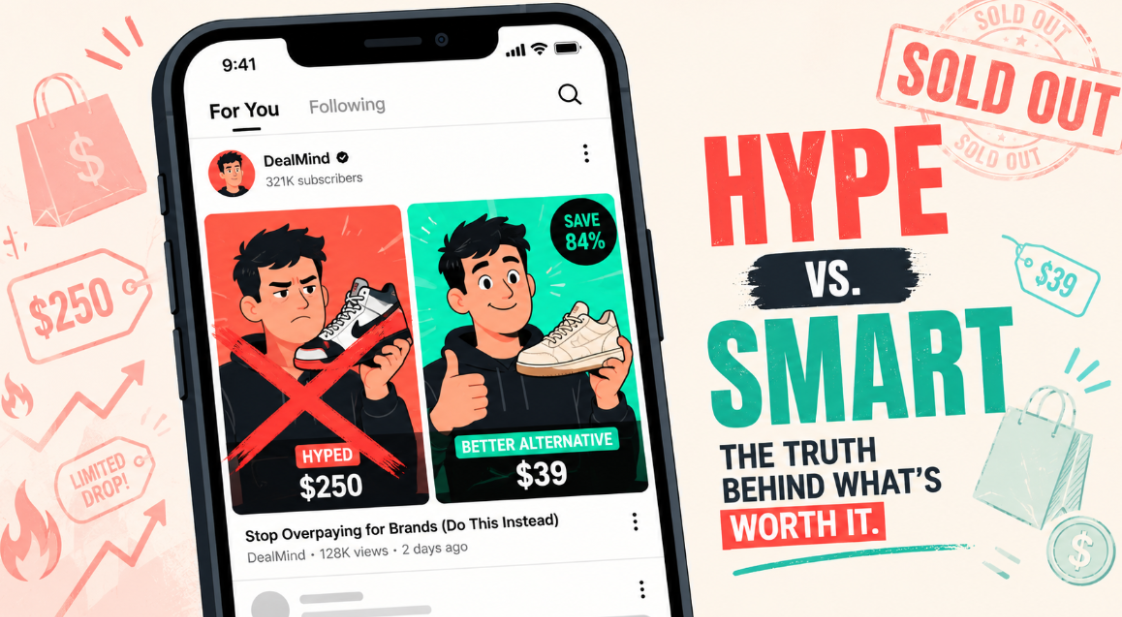
Here’s the part brands (and consumers) shouldn’t miss: telling people not to buy something is rarely where these videos end. The typical arc goes, the creator trashes an expensive, viral product, then pulls out two or three “better” or cheaper alternatives. The rejection is the setup; the recommendation is the payoff, and it lands harder because the creator just proved they’re not simply a shill. Marketing analysts have described this explicitly as a trust-building mechanic: when a creator shows restraint about what doesn’t work, their next recommendation carries more weight, and brands are reporting higher conversion on launches that follow this pattern. One writer summed up the irony bluntly: de-influencing didn’t kill the sales pitch, it just made the pitch more convincing by wrapping it in the language of rebellion.
This dynamic explains why influencer marketing spending kept climbing even as “anti-hauls” went viral. The category was projected to surpass $30 billion in 2025, and the vast majority of consumers still say they’ve bought something because an influencer recommended it.
How Brands Are Actually Responding
Lean into being the “dupe.” e.l.f. Cosmetics built a growth engine by openly marketing affordable versions of viral luxury products; its $14 Halo Glow Liquid Filter, explicitly positioned against Charlotte Tilbury’s $49 original, went viral precisely because creators did side-by-side comparisons proving the cheaper version held up. Beauty brands like MCoBeauty and retailers like Trader Joe’s (with its Supergoop-adjacent sunscreen) have followed the same script: don’t hide from the comparison, invite it.
Turn criticism into product feedback. Marketing researchers advise brands to actively track de-influencing mentions the way they’d track any other customer signal treating public callouts as free insight into where a product or promise is falling short, rather than a PR fire to extinguish. Heavy-handed, defensive responses tend to backfire and invite more scrutiny; acknowledgment and visible follow-through tend to defuse it.
Play along, publicly. When Olaplex saw #olaplexdupe accumulated tens of millions of views, it responded by shipping influencers a jokey fake “dupe” product of its own rather than issuing cease-and-desists. Lululemon’s “Dupe Swap” event let shoppers trade knockoff leggings for the real thing for free, a bet that once people felt the actual product quality, the imitation would lose its appeal. Both moves converted a viral threat into earned media and goodwill.
Shift the pitch from hype to durability. Brands like Italic have adjusted messaging away from viral urgency and toward longevity and cost-per-wear, matching the underconsumption-core instinct to buy less but buy better particularly as broader consumer spending has tightened.
Recruit micro- and nano-creators, and let the criticism be real. Because paid promotion is now discounted by default, brands are shifting budget toward smaller creators with track records of honest reviews, and in some cases explicitly asking creators to include real drawbacks alongside genuine recommendations, since a caveat is what makes the endorsement believable in the first place.
The Bottom Line
De-influencing was never really anti-consumption, it was a correction. Audiences didn’t stop wanting recommendations; they stopped tolerating the fiction that every recommendation was disinterested. The brands surviving this era aren’t the ones shouting the loudest about how great their product is. They’re the ones willing to be compared, criticized, and occasionally mocked in public because in a landscape this skeptical, a brand that can survive scrutiny is the only kind of brand left worth trusting.