
 by
by The shift happened faster than anyone predicted. In 2024, big brands experimented with generative AI. By 2025, they replaced entire production pipelines with it. As we enter 2026, the question isn’t whether your competitors are using generative AI; it’s whether you’re using it strategically enough to keep up.
Generative AI has fundamentally altered what’s possible in marketing. We’re not talking about basic automation or predictive analytics, we’re talking about AI that creates: campaigns, visuals, copy, videos, and entire brand experiences from prompts. This is the technology reshaping how the world’s biggest brands communicate.
The Brands That Made Headlines
Coca-Cola’s AI Holiday Campaign
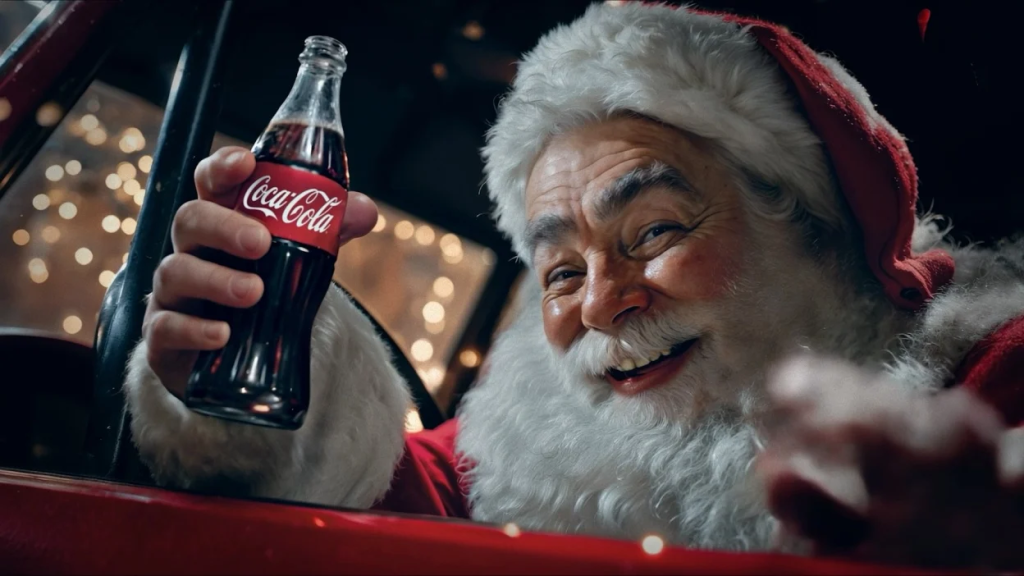
When Coca-Cola released their generative AI-powered holiday campaign in late 2024, the backlash was loud. But the results were louder. The “Holidays Are Coming” spot, created in partnership with agencies using generative AI tools, sparked intense debate about authenticity versus innovation. While exact cost savings weren’t publicly disclosed, the campaign demonstrated the speed and scale advantages of generative AI production, generating massive social media engagement and conversation.
What made this watershed was simple: Coca-Cola proved that gen AI could handle their most iconic, emotionally resonant campaign of the year. If generative AI could create the Coca-Cola Christmas campaign, it could create anything.
Toys “R” Us Goes Full AI
Their brand film, created entirely with OpenAI’s Sora; a text-to-video generative AI model, in June 2024, proved that generative AI could handle complex narrative storytelling. The 60-second origin story showcased the potential for brands to bring creative visions to life at speeds impossible with traditional animation. From text prompt to finished video, generative AI compressed months of work into weeks.
Unilever’s Content Factory
Unilever has been vocal about embracing generative AI for content creation at scale. The company has integrated generative AI tools across its brand portfolio to produce hyper-targeted content variations-enabling personalization that would be economically impossible with traditional production methods.
Here’s what’s remarkable: A single creative brief now yields hundreds of variations through generative AI. Different headlines, different visuals, different CTAs; all tested and optimized in real-time. Generative AI turned Unilever’s marketing into a content multiplication engine.
Mercedes-Benz’s Virtual Production
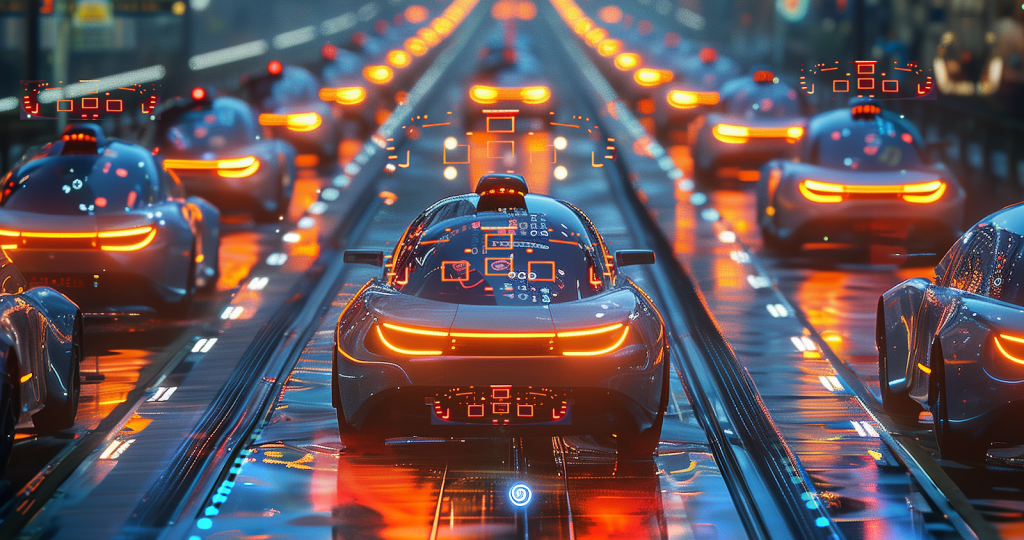
Luxury automotive brands including Mercedes-Benz have increasingly turned to generative AI and CGI for product visualization, reducing the need for expensive location shoots while maintaining photorealistic quality. This shift allows for rapid creation of marketing assets across multiple markets simultaneously.
Generative AI can now place a vehicle in any environment; desert, cityscape, mountain road; with photorealistic accuracy, no physical shoot required. The same car, infinite contexts, all generated from prompts.
2025 McDonald’s Netherlands
THE infamous AI McDonald’s Ad in Full
McDonalds released an AI-generated Christmas commercial titled “It’s the Most Terrible Time of the Year,” a satirical spin on the classic holiday tune that leaned into chaotic seasonal mishaps and suggested customers could “hide out in McDonald’s until January’s here.” Instead of capturing festive warmth, the ad drew widespread online backlash, viewers found the visuals unsettling and the tone cynical, and many critics labelled the generative-AI execution as “creepy” or emotionally flat. McDonald’s ultimately pulled the spot within days, underscoring that while AI can accelerate production, audiences still crave human emotional resonance that today’s tools sometimes miss.
Beyond Consumer Brands: The Broader Shift
App-Based Companies: Indian tech companies like Swiggy have embraced generative AI for creating scaled marketing content, leveraging the technology to provide sophisticated marketing assets to their diverse partner ecosystem. Small restaurants with zero marketing budget can now have content that rivals premium brands; all powered by generative AI.
B2B Tech: Enterprise software companies have recognized generative AI’s potential for simplifying complex products. Companies like Salesforce have embedded gen AI across their marketing operations, with Dreamforce 2024 showcasing extensive use of AI-generated content. From technical diagrams to explainer videos and product demos, what once required specialized illustrators is now created on demand—reshaping how creative agencies in Bangalore support B2B tech brands with faster, scalable, and more adaptive content solutions.
The Numbers That Matter: Generative AI’s Market Impact
The data on generative AI adoption in marketing is striking:
- Gartner reported that 63% of marketing leaders planned to invest in generative AI in 2024, with that number expected to grow significantly into 2025
- Forrester predicted that generative AI software spending would reach $6.8 billion in 2024, with marketing being one of the top use cases
- McKinsey research indicates that generative AI could add $2.6 to $4.4 trillion annually across various industries, with marketing and sales as key beneficiaries-representing up to 75% of generative AI’s total potential value
But here’s the statistic that matters most: McKinsey found that generative AI could increase marketing productivity by 5-15% of total marketing spend. For a company spending $100 million on marketing, that’s $5-15 million in value creation annually.
The critical insight: According to various industry studies, the value isn’t just in cost reduction-it’s in enabling personalization and speed that wasn’t economically viable before generative AI. However, brands must balance automation with human creativity and strategic oversight. Generative AI amplifies good strategy; it doesn’t replace it.
How We’ve Stayed Ahead with Generative AI
At our agency, we didn’t wait for clients to ask about gen AI. We rebuilt our production process around it:
It wasn’t a gen AI experiment, we used it to rethink when production is necessary, and when it isn’t.
EdgeVerve
For a B2B storytelling project with EdgeVerve, we replaced what would traditionally be a full live-action setup with an AI-led workflow, creating five 30-second narrative films end to end without a physical shoot. The takeaway was clear: AI doesn’t invent stories; clarity of thought does. When the idea is locked, AI executes at a speed traditional production can’t match.
Swiggy
Here’s the videos
With Swiggy, the work was performance-led. We created quick, hook-driven ads designed to test, learn, and iterate fast. AI allowed us to move from idea to live quickly, with creative optimized for attention and outcomes, not polish. Scale came later; speed came first.
Dabur
With Dabur, the ambition was bold: an all–AI brand film for their kids’ toothpaste. The challenge emerged when the creative direction involved Disney-like characters. Working anywhere close to the Disney universe meant navigating strict IP and copyright guardrails set by Disney, including clear restrictions on the use of generative AI. It became a valuable reminder that AI creativity doesn’t exist in a vacuum, it must operate within legal and brand ecosystems. An added layer of complexity was that the film involved children, many generative AI models either refused to render kids altogether or applied heavy safety restrictions, reinforcing the need for careful model selection, ethical consideration, and creative workarounds. The takeaway: AI works best when paired with strong original thinking and a deep understanding of brand and legal boundaries.
Herbalife
For Herbalife, the brief leaned heavily into realism, human expressions, subtle emotions, and a “shot-on-camera” authenticity that audiences instinctively trust. While gen AI accelerated environments, transitions, and visual consistency, we found that nuanced facial micro-expressions and natural human movement are still areas where AI hasn’t fully caught up. Instead of forcing realism where it breaks, we adopted a hybrid approach, using AI where it excels and live-action sensibilities where credibility mattered most. The insight was clear: AI doesn’t replace production yet, but when used intentionally, it meaningfully extends it.
The real lesson: gen AI doesn’t eliminate craft, it pushes it upstream. When execution gets easier, thinking gets harder. And that’s where the real advantage lies.
What 2026 Actually Looks Like with Generative AI
1. Mass Personalization Becomes the Default
One-size-fits-all campaigns are dead. Brands won’t make one ad, they’ll make one system. A single master creative will be transformed by generative AI into thousands of real-time variants based on age, location, interests, and context. Personalization won’t be a feature, it’ll be the baseline.
2. Campaigns Evolve in Real Time
Campaigns won’t “launch and wait” anymore. Generative AI will analyze performance within hours, test new versions instantly, and scale winners in days. What used to take months will happen within a single week.
3. Budgets Shift from Production to Strategy
As gen AI reduces production costs, money moves upstream. The real challenge won’t be making content, it’ll be deciding what to say, to whom, and where. Strategy and distribution become the new bottlenecks.
4. AI-Native Agencies Disrupt the Industry
By 2026, brands will start choosing agencies built entirely around gen AI, not ones retrofitting it. Agencies that don’t restructure their workflows around AI risk becoming irrelevant.
5. B2B Finally Goes Personal at Scale
B2B marketing catches up. Websites will generate custom demos, explainer videos, and messaging instantly, tailored to a visitor’s industry, company size, and pain points. No human intervention. Just relevance, instantly. We already see this with systems like EdgeVerve AI Next.
By 2026, gen AI turns advertising from fixed campaigns into living systems, personalized at scale, optimized in real time, cheaper to produce, and driven by strategy over execution.
What Marketing Leaders Should Do Now About Generative AI
Audit your workflows: Identify legacy processes that generative AI can compress, automate, or scale.
Set brand guardrails: Define what’s non-negotiable vs flexible so speed doesn’t dilute consistency.
Build AI literacy: Teams don’t need to code, but they must think in prompts, iterations, and AI-assisted workflows.
Upgrade measurement: When content scales exponentially, analytics must track performance across hundreds of variants.
Choose AI-native partners: Work with agencies built around generative AI, not ones still “testing” it.
The Reality Check on Generative AI in Marketing
Gen AI won’t replace marketing teams, but marketers who use it will replace those who don’t. It removes friction between creative vision and execution, making bad processes obsolete, not creativity. The real skill of 2026 isn’t using AI tools, it’s knowing what to ask of them.
Agencies built for the old production model won’t survive, and those treating gen AI as mere cost-cutting will fall behind. The winners will see it as a creative multiplier, not a budget line item. This shift isn’t coming, it’s already happening, and your competitors are moving.
Unlike past “revolutions” that changed distribution or channels, generative AI changes creation itself. It’s a new production paradigm where the constraint isn’t time or money, but imagination and strategy.