
 by
by The decision rarely happens at the checkout
Most people remember the last thing they bought. Very few remember the moment they decided to buy it. That moment usually arrives earlier, stretched across time, shaped by exposure, familiarity, and a gradual sense of comfort. By the time money changes hands, the decision has already settled. The checkout simply gives it a timestamp, like signing off on something that has been quietly decided.
This is the shift modern commerce is built on, whether brands acknowledge it or not. Purchasing has stopped being a standalone act and started functioning as the visible outcome of something deeper. People buy when they feel oriented and steady in their choice. They buy when the brand already feels familiar enough to stop feeling risky.
How engagement quietly took the lead role
For decades, engagement was treated as support staff. It existed to soften messaging, warm audiences, and make persuasion feel less obvious. The assumption was that attention needed to be captured, interest manufactured, and urgency applied before someone would act.
That sequence has loosened.
People now spend far more time around brands than inside moments of purchase. They notice tone, behaviour, and consistency long before they notice offers. They watch how brands behave when nothing is being sold and how they respond when the conversation drifts slightly off-script. Over time, this exposure lowers effort. Buying stops feeling like a decision that needs justification and starts feeling like something that simply fits.
Trust grows in places where nothing is being asked
The most influential brand moments today often occur where no transaction is present. They live inside routines, habits, and shared spaces that are not framed as selling environments. This is where trust forms, not because it is demanded, but because it is accumulated slowly.
The Edelman Trust Barometer has consistently shown that trust is one of the strongest predictors of brand choice, often outweighing price in competitive categories. People do not reward brands for being impressive. They reward them for being dependable. The bar is deceptively simple and surprisingly difficult to clear.
Trust does not spike. It settles.
When behaviour becomes the brand
Some brands stopped centering their identity on what they sell and started centering it on what people do. When a brand attaches itself to behaviour, it becomes difficult to replace, because behaviour repeats whether anyone is paying attention or not.
Running gradually stopped being framed as a product category and started being treated as a personal practice. Training plans, progress tracking, and shared milestones created continuity. The brand behind those systems became part of the runner’s internal narrative long before any purchase decision surfaced. When new shoes entered the picture, they felt less like an evaluated option and more like maintenance. The decision had already been made during all the mornings when the alarm went off.
Alignment creates loyalty without pressure
A similar outcome emerged in a different emotional register. Some brands recognised that urgency was not the only way to drive demand. By slowing the transaction and foregrounding values, they allowed customers to feel steady rather than hurried.
Repair programmes, resale initiatives, and open conversations about consumption changed how people related to Patagonia. The brand did not position itself as something to chase. It positioned itself as something to stay with. Buying felt less like responding to a prompt and more like reaffirming a preference that had already taken shape.
Harvard Business Review’s research on emotionally connected customers supports this pattern. Customers who feel aligned with a brand’s values show higher lifetime value and longer retention. Conviction scales well and requires little persuasion to maintain.
Participation changes the meaning of purchase
In some cases, the boundary between brand and audience softened even further. Creativity stopped being delivered as a finished product and started becoming a shared process.
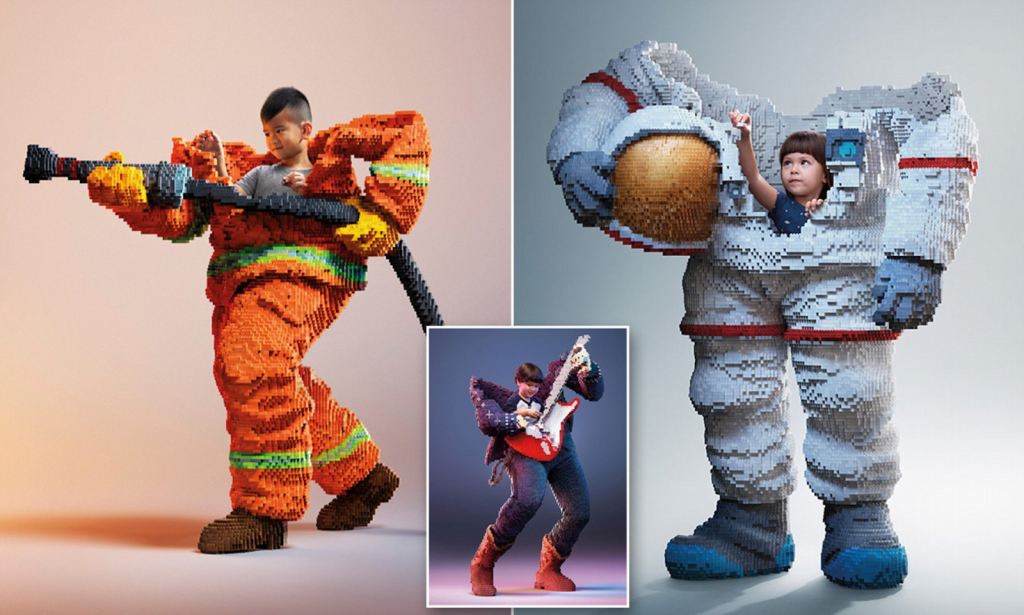
When people were invited to propose ideas, vote on outcomes, and see those ideas materialise, ownership began well before checkout. LEGO Ideas transformed imagination into collaboration. Buying a set that emerged from this ecosystem felt less like acquiring an object and more like acknowledging a shared culture that had been forming quietly.
A brief pause for the data that actually matters
At this point, instinct aligns neatly with evidence. Trust matters more than claims and emotional connection drives far more than satisfaction alone. According to the Edelman Trust Barometer, brands perceived as ethical, competent, and consistent are almost 60 % more likely to be chosen and 65 % more likely to be recommended, particularly in uncertain moments. Harvard Business Review’s research shows that emotionally connected customers deliver over three times the lifetime value of those who are merely satisfied, returning more often and advocating without being asked.
Deloitte adds that 65 % of consumers report that a sense of belonging or shared values with a brand influences their purchases, and more than half say they remain loyal to brands that make them feel understood rather than persuaded. Across these studies, the pattern is clear. When brands earn familiarity and alignment, purchase is no longer a leap of faith. It becomes a continuation of something already happening in the mind and daily life of the customer.
In other words, numbers confirm what brands like Nike, Patagonia, LEGO, Rhode, and Miu Miu have been quietly doing for years. Presence and relevance, not urgency, move people to act. By the time a transaction happens, it is simply a visible punctuation on a relationship that has been forming quietly all along.
How modern branding shapes taste today
The shift becomes clearest when you look at brands shaping taste without announcing that they are doing so. Their influence operates through familiarity, social validation, and emotional resonance rather than argument.
Skincare offers a useful example because it quietly moved from function to ritual. Rhode did not grow by convincing people they needed better formulations. It grew by embedding itself into daily routines where repetition creates comfort. The brand reduces decision effort. Over time, it becomes the default. People buy not because they are compared, but because the choice already feels made.
Fashion followed the same logic through mood rather than explanation. Miu Miu’s resurgence was driven less by product storytelling and more by aesthetic tension. The brand leaned into contradiction and allowed awkwardness to become expressive. What felt unfamiliar at first became desirable through repeated exposure. Purchase became participation in a cultural moment that felt alive rather than resolved.
The psychology behind why this works
Much of this shift can be explained through well-established behavioural patterns, even if brands rarely name them outright.
Repeated exposure reduces cognitive effort. When something appears often enough, it feels easier to choose even if no explicit comparison has been made. Familiarity builds preference.
Social proof matters. People look to others to validate taste, particularly in identity-linked categories. When brands appear consistently in cultural spaces, their value is absorbed indirectly rather than argued.
Identity reinforcement matters more than persuasion. People prefer choices that confirm who they already believe themselves to be. Brands that align with self-perception face less resistance than those that ask for transformation.
Decision fatigue also shapes behaviour. Brands that simplify choice through consistency and tone reduce the mental cost of buying. When effort drops, loyalty rises.
The quiet reordering of the funnel
What has changed is the sequence. Engagement no longer leads neatly to purchase. Purchase follows presence. Trust precedes transaction. Familiarity removes hesitation.
By the time someone buys, they are not weighing options. They are continuing a relationship. The funnel did not disappear. It simply stopped behaving like a funnel.
The receipt as a footnote
In this landscape, the receipt is not the climax. It is a formality. The real story unfolds earlier in spaces where no one is optimising conversion or measuring intent.
Brands that understand this stop asking how to sell more and start asking how to remain present without demanding attention. They build for continuity rather than urgency. They design for participation rather than persuasion.
Commerce still matters. Money still changes hands. It just does so with less resistance because the decision has already been made quietly, long before the screen refreshes.
Buying has not become emotional. It has become familiar.
And familiarity, when handled well, tends to justify itself.