 by
by The Midnight Miracle in an Integrated Agency
Picture this: it’s 2 AM at Clevertize – an integrated marketing agency in Bangalore – and a lone designer is racing against a brutal deadline. In the past, this scenario meant bleary eyes, gallons of coffee, and overnight hustling to hand-craft visuals before dawn. Today, however, a new ally stands by her side. With a few prompts to an AI tool, she watches in astonishment as concepts, layouts, and even video scenes materialize in minutes. The new wave of AI tools has arrived, and it’s literally saving designers’ lives and deadlines by turning all-nighters into smooth, on-time deliveries. It’s a transformation many creative teams – from Bangalore to the busy studios of marketing agencies in Mumbai – are beginning to witness firsthand.
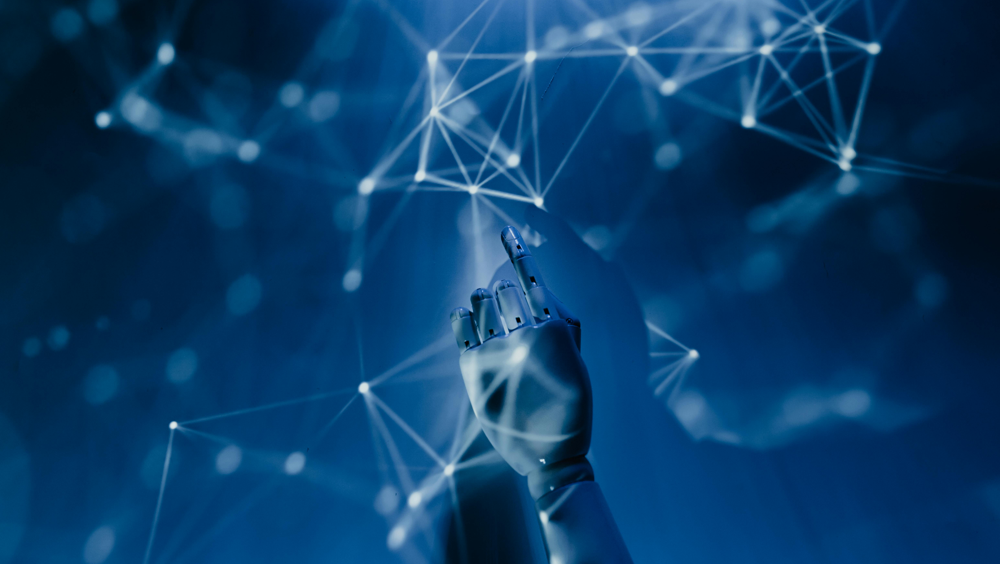
A robotic hand reaches into a digital network, symbolizing how AI technology now extends the creative reach of designers. Modern designers operate under intense pressure: tighter deadlines, higher client expectations, and the need to produce content for countless platforms. AI has emerged as a lifeline in this high-speed environment, not as a threat but as a powerful assistant. The best part? These AI-powered design tools are getting smarter and easier every day. They handle the grunt work and repetitive tasks, allowing human creatives to focus on what they do best – ideating, refining the vision, and adding that spark of soul into the project. In short, AI is helping designers save time, stay creative, and meet deadlines without burning out.
Ideation and Storyboarding Reimagined
Great design starts with a great idea – but even the most inventive minds hit creative blocks. This is where AI steps in as the muse. Generative AI systems like Google’s Gemini (or OpenAI’s GPT-4) have become brainstorming buddies for our team. We can sketch out half-formed concepts in plain language and let the AI expand on them, offering fresh angles and inspiration. In fact, Gemini is designed to help creators “break through creative blocks and visualize ideas in a flash,” whether for product concepts, rapid prototyping or storytelling. The result? Instead of staring at blank pages, our designers get instant mood boards, campaign slogans, or even rough drafts of visuals to kickstart the project.
Human creativity meets machine speed: a designer symbolically collaborates with an AI (robotic arm) to generate new ideas. Storyboarding and concept art have also been transformed. In the past, crafting a storyboard for a client pitch could take days of sketching or hunting for reference images. Now, with AI image generation tools, we create concept visuals in a fraction of the time. Tools like Freepik’s AI Image Generator or Higgsfield allow us to generate custom images from a simple prompt or mix of references.
This means a cohesive set of logos, icons, posters and mockups can be drafted by the AI for refinement, sparing our designers hours of labor. And because these suites integrate multiple functionalities (image editing, resizing, background removal, etc.), there’s no more tool-hopping – everything is handled in one place. Our ideation phase has become a playground where human imagination and AI’s speed play off each other, resulting in richer ideas delivered faster than ever.
From Prompt to Final Cut: AI in Motion Design
Once the idea is in place, execution is the next Herculean challenge – especially for motion graphics and video. Traditionally, producing a short promo video or animation could take a team of animators and editors working for weeks. Today, text-to-video AI tools are changing the game. We can literally type out a description of a scene, and watch an AI like Google’s Veo generate a rough cut of that scene in seconds, complete with sound and motion. For instance, using Google’s AI filmmaking tool Flow (powered by the Veo model), our motion designers can feed in “ingredients” – a set of reference images or frames – and let the AI create a final scene that looks just as we envisioned. It’s like magic: provide a starting image and an ending image, and Flow will generate a seamless video that bridges the two with artful, cinematic transitions.
The capabilities don’t stop there. Need a longer shot? Tools like Flow’s “Extend” can stretch a short clip into a minute-long continuous sequence by intelligently generating what comes next. The AI handles in-betweening, camera movements, even consistent lighting and shadows, which means we spend less time tweaking frames and more time perfecting the story. We’ve used these prompt-to-reel techniques to produce engaging social media videos in record time. A motion graphic designer can now prototype an entire 8-second reel for a client in one afternoon – something nearly unthinkable a couple of years ago. The creative control is also improving rapidly: we can insert new objects or remove unwanted elements from generated scenes almost as easily as clicking a button. In short, AI video tools have taken us from painstaking frame-by-frame animation to a world where our ideas move as fast as we can type, without sacrificing quality.
Our AI Toolbox (AI Tools): Meet the Lifesavers
To truly understand how these benefits come together, let’s look at the key AI tools that have become part of our everyday integrated marketing workflow:
Gemini (Google AI Suite)
A generative AI powerhouse we use for brainstorming campaign ideas, writing copy drafts, and even suggesting design alternatives. Gemini’s multimodal abilities mean it can help with everything from coding a quick interactive prototype to summarizing research, but for our designers its biggest value is in idea generation. It helps us “visualize ideas in a flash” and overcome creative blocks during ideation acting like an ever-ready collaborator when we need fresh perspectives.
Veo & Flow (AI Video Generation) –
Veo is Google’s state-of-the-art text-to-video model, and Flow is the user-friendly tool built around it. This duo is our secret weapon for motion graphics. We describe a scene or provide a couple of key frames, and Veo+Flow output a high-quality clip complete with native audio and smooth transitions. The system gives us granular control too – multiple reference images to lock in a style, or start-and-end frame inputs to guide the narrative arc. It’s like having a junior video editor who works at superhuman speed.
Higgsfield Platform
An emerging AI creative platform that integrates various models for image generation, video, and effects. We tapped into Higgsfield to access cutting-edge models (including Google’s) with an easy interface. With Higgsfield, our team can generate visuals, swap characters in a scene, upscale images, or even create talking avatar videos all in one hub. It’s a godsend when we need that one perfect concept visual or variant in a hurry.
Freepik AI Suite
The familiar Freepik resource library now supercharged with AI. The Freepik AI Suite can do it in minutes, preserving brand style across the board. It can even automate an entire branding package from scratch, translating a simple concept into logos, business cards, social media posts and more, ready for export or client review.
ElevenLabs (AI Voice Generation)
Last but not least, our motion designers often pair visuals with audio using AI voice generation. ElevenLabs is a prime example of AI that produces human-like voiceovers from text. Instead of booking a voice artist for every draft video, we type up a script and get a pro-quality voiceover in seconds. This tool has been a lifesaver for rapidly creating prototype videos with narration or dialogue – we can test how a line sounds, iterate on the script, and even generate multiple language versions without leaving our desks. While final productions may still involve human voice talent, using AI voices in the interim cuts down our turnaround time dramatically.
Together, this toolbox has effectively become our extended design team – one that works 24/7, never gets tired, and scales up on demand. It’s important to note that these tools don’t replace the creativity or decision-making of our human designers; instead, they augment our capabilities. We still craft the vision and make the critical aesthetic choices, but the AI helpers take on the heavy lifting for execution and exploration, so we can explore more ideas and perfect the final output.
Delivering More, Stressing Less: Real Results
The impact of these AI tools on our projects has been nothing short of game-changing. As one of the forward-thinking marketing agencies in Mumbai and Bangalore, we’ve seen how embracing AI translates into tangible benefits for both our designers and our clients. Take our work for Swiggy for example – particularly their Instamart (online grocery) and dining experiences divisions. With the help of AI-driven content creation, our integrated team now delivers 5–10 customized videos every week for Swiggy’s campaigns. Instead of burning out editing endless variations, our motion designers use prompt-based generation to produce those videos swiftly, then spend their time refining the best ones for quality and brand fit. The client gets more content and quicker turnarounds, while our team stays sane and creative.
We see similar results with other clients. For EdgeVerve (a global fintech solutions provider) and Carelon (healthcare services), adopting AI in our workflow means we can prototype bold ideas and deliver polished visuals faster than ever – which these tech-savvy clients absolutely love. We can mention a specific scenario: recently, we were tasked with creating a detailed visual narrative for a complex product demo.
In another campaign, one of our designers single-handedly produced a suite of promotional videos for a client in just three days (normally a week-long job for a team) by leaning on Higgsfield and Flow; the client actually asked if we had an army of editors working overtime, when in reality it was the clever use of AI that “saved a creative department’s worth of work” and impressed them with the speed. These stories aren’t flukes – they’re becoming routine.
Always Experimenting, Always Ahead
In the rapidly evolving landscape of design technology, resting on yesterday’s tools is not an option. At Clevertize, we pride ourselves on staying up to date with every new AI tool launching on the horizon – and more importantly, experimenting relentlessly to see how it can further ease our workflow or spark new creative possibilities. Whether it’s a beta feature that can turn a rough pencil sketch into a vector illustration, or a new text-to-3D model that could help our 3D designers, our culture is to dive in and play with it. This proactive experimentation mindset is part of our identity as an integrated marketing team: we blend the latest tech into a holistic creative process across strategy, design, and media. Every time a new AI tool emerges, our designers and motion graphic artists are among the first to take it for a spin.
Many of these experiments find their way into our regular process – each addition shaving off hours of grunt work and adding to the polish of the final output. This continuous learning loop means we’re often ahead of the curve, delivering innovative solutions that surprise our clients. It’s also a message to all designers out there: don’t fear the rise of AI in our field, embrace it as a collaborative partner. The narrative is no longer “AI vs. designers,” but rather designers with AI achieving feats that neither could alone. By weaving these new-wave AI tools into our storytelling, design, and production, we aren’t just saving our own time – we’re raising the bar for creative excellence in marketing. And as the line between imagination and realization gets thinner each day, one thing is clear: the future of design is here, and it’s brighter (and faster) than ever.