
 by
by How to Edit a 5-Minute Story From 2 Hours of Footage
Two hours of footage. Five minutes of story. That’s a 96% deletion rate — and somehow, the five minutes that survive have to feel like the whole point of the other 115. If you’ve ever opened a project bin and felt your stomach drop at the clip count, this one’s for you.
Here’s the thing nobody tells you when you start editing: the footage isn’t the story. The footage is just evidence that a story might exist somewhere inside it. Your job is archaeology, not assembly.
1. Don’t Open Your Editor Yet — Open a Notebook
The biggest mistake in short-form editing is diving straight into the timeline with 2 hours of raw clips and hoping a story assembles itself through sheer proximity. It won’t. Before you touch a single cut:
- Watch everything once, at real speed, no skipping. Take notes, not selects. Write down timecodes where something made you feel something — laugh, lean in, tear up, go quiet.
- Write one sentence describing what this story is actually about. Not the topic — the emotional throughline.
- Identify your 3 acts in real life. Even unscripted footage has a beginning, middle, and end. Find them before you edit them.
“A chef opens her first restaurant” is a topic. “A woman proves to her late father that she was listening the whole time” is a story.
2. Build a “Selects” Timeline First
Don’t cut your final story yet. Create a separate sequence and drop in everything that made your notebook list — every good line, every strong visual moment, every beat of emotion — with zero regard for order or length. This selects reel will probably run 20–30 minutes. That’s fine. This isn’t editing, it’s curating.
The magic of this step: it separates finding good material from arranging good material. Trying to do both simultaneously is why editors freeze up staring at a bin of 400 clips. One task at a time.
3. Find Your Spine
Now comes the real edit. Look at your 20–30 minute selects reel and ask: if I could only keep 5 moments, which 5 would still tell the whole story? That’s your spine — the non-negotiable backbone the entire cut hangs off. Usually it’s:
- An opening hook (first 5–8 seconds — yes, seconds, not minutes)
- A moment that sets up the stakes or question
- A turning point or obstacle
- The moment of change or realization
- A resolution beat that lands the emotional note
Everything else in your selects reel exists only to support those five moments — as texture, breathing room, or connective tissue. If a clip doesn’t serve one of them, it doesn’t survive.
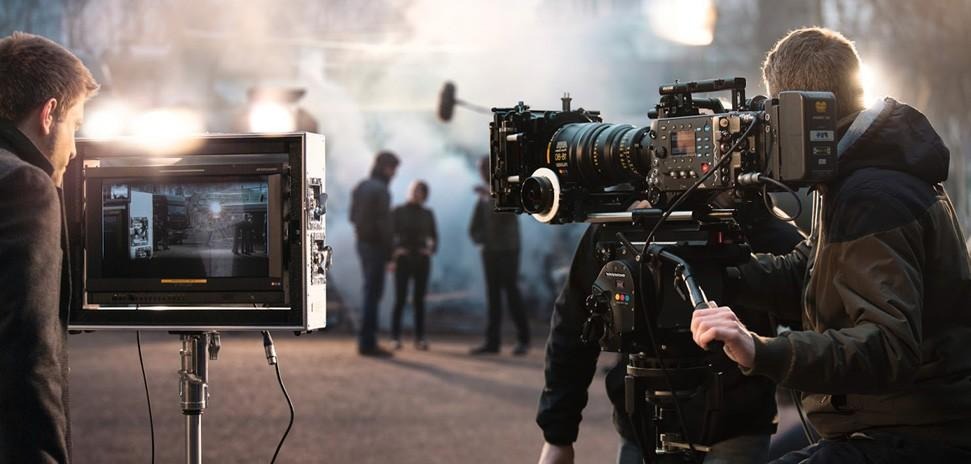
On set, every angle feels essential. In the edit, only the ones that serve your spine make the cut.
4. Cut for Rhythm, Not Just Content
A 5-minute story isn’t a shrunk-down documentary — it’s closer to a piece of music. Vary your pacing on purpose:
- Fast cuts during energy, action, or montage moments
- Long, uncut holds during your most emotionally loaded beat — resist the urge to cut away from a powerful silence or a genuine reaction
- Breathing room (a shot of hands working, a landscape, an ambient pause) right before your biggest emotional turn, so the audience has time to feel the stakes before the payoff
The biggest tell of an amateur cut is uniform pacing — every shot getting roughly the same screen time regardless of what it’s carrying emotionally.
5. Kill Your Darlings (Especially the Technically Perfect Ones)
This is the hardest part. You will have a shot that’s gorgeously lit, perfectly framed, technically flawless — and it will not serve the story. Cut it anyway. A 5-minute story has room for maybe 40–60 shots total, depending on pacing. Every single one has to be pulling weight. “It’s a beautiful shot” is not a reason to keep it; “it moves the story forward” is.
A trick that helps: watch your cut and, for every single shot, ask “what would happen if I removed this?” If the answer is “nothing,” it goes.
6. Sound and Color Are Half the Story
With this much footage-to-runtime compression, your sound design and grade carry enormous weight. A few things that separate amateur cuts from ones that feel intentional:
- Room tone / ambient sound under every cut, even silent ones — true silence reads as broken audio, not drama
- A score that has its own arc — building, releasing, matching your emotional spine rather than looping flat in the background
- Sound bridges — start the audio of the next scene slightly before the picture cuts to it, so 2 hours of disconnected footage feels continuous
- A consistent grade — small, deliberate tweaks to temperature and exposure so every clip, regardless of when or where it was shot, feels like it belongs in the same story
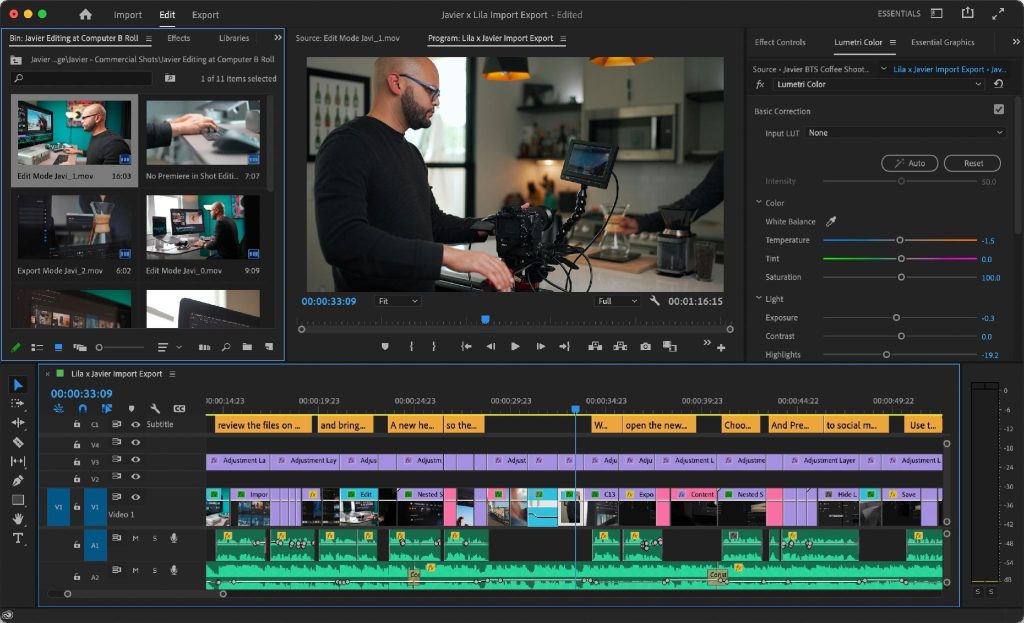
Color correction is where scattered footage from different moments starts to feel like one continuous world.
7. Watch It Cold the Next Day
Don’t trust your judgment at 1am after 6 hours of scrubbing timelines. Sleep on it. Come back and watch the cut once, straight through, no pausing, as if you’re a stranger seeing it for the first time. You’ll immediately feel where it drags, where it’s confusing, and where it needs one more beat. Trust that first-watch instinct — it’s the closest thing you have to your actual audience’s experience.