

 by
by WHY YOUR VIDEOS DON’T FEEL CINEMATIC
Everyone blames the gear. “I need a better camera.” “I need a full-frame sensor.” “I need that $3,000 lens.” But hand a $50,000 cinema camera to someone who doesn’t understand light, and they’ll produce something that still looks like a home video — just a sharper one.
Cinema isn’t a resolution. It’s a set of decisions. And most people skip straight past the decisions and go shopping for hardware instead.
Here’s what’s actually happening in the footage that doesn’t feel cinematic — and the four decisions that fix it.
1. Your Light Is Flat, Not Motivated
Point a phone at a room lit by an overhead bulb and everything looks… correct. Evenly lit. Shadowless. And completely lifeless.
Cinematic light isn’t about brightness — it’s about contrast and direction. Real films almost never light a scene evenly. They pick a “motivated” source — a window, a lamp, a streetlight — and let everything else fall into shadow. That contrast is what gives a face dimension instead of looking like a passport photo.
The fix isn’t more light. It’s less light, aimed with intention. One key light, one shadow side, done.
2. You’re Grading for “Nice,” Not for “Mood”
Most people’s idea of color grading is bumping saturation and calling it a day. But the grade is where a film tells you how to feel before a single line of dialogue is spoken. Teal-and-orange isn’t a trend, it’s a tool — it separates skin tones from backgrounds instantly. Desaturated, crushed blacks tell you this is tense. Warm, soft highlights tell you this is nostalgic.
The mistake isn’t under-grading — it’s grading without a point of view. Before you touch a slider, decide: what does this scene need to feel like? Then grade toward that answer, not toward “looks nice.”
3. Your Camera Moves Like It’s Nervous
Handheld footage from a phone doesn’t shake because handheld is bad — Children of Men is handheld and it’s one of the most cinematic films ever shot. It shakes because it’s undamped. Every micro-jitter of your hand gets recorded raw.
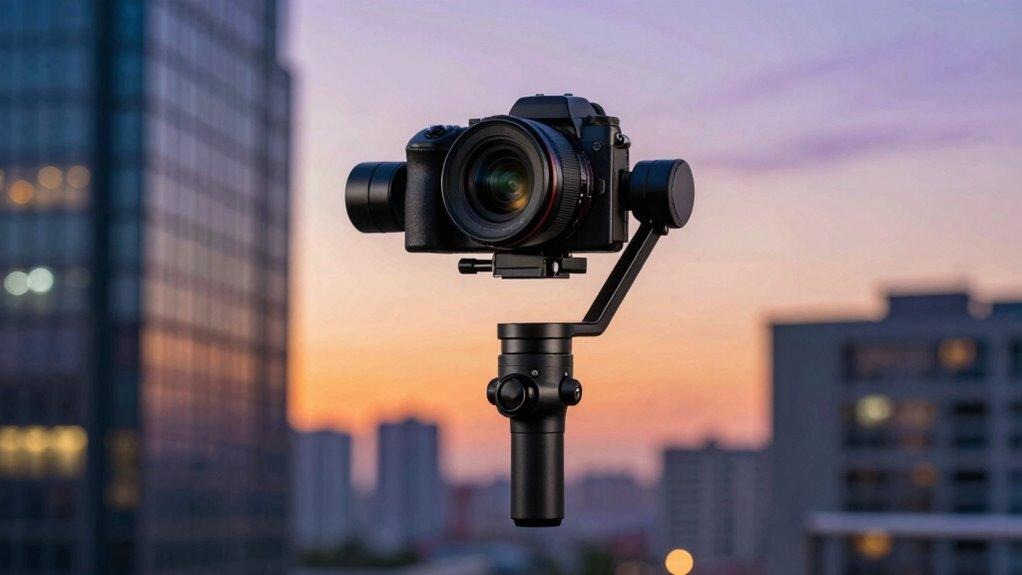
A gimbal doesn’t just stabilize — it gives movement weight and intention.
Real cinematic movement, even at its shakiest, has weight behind it — a slow push, a deliberate pan, a glide. It moves like it means something, not like it’s reacting to your footsteps. A cheap gimbal or even just bracing your elbows against your ribs will change your footage more than any color grade ever will.
4. You’re Centering Everything
Faces dead-center. Subjects dead-center. Horizon dead-center. It’s the single most common tell of non-cinematic footage — and it’s an instinct, because centering feels “safe” and “correct.”
But film composition almost never centers the subject. It uses negative space. It puts a character in the left third of the frame and lets the emptiness on the right say something — isolation, anticipation, scale. A frame with breathing room reads as intentional. A frame with the subject glued to the middle reads as a snapshot.
The Real Difference
None of this is about equipment. It’s about treating every frame as a decision instead of a default — where the light comes from, what the color is saying, how the camera earns its movement, and where you choose not to put your subject.
Cinema isn’t expensive. It’s just deliberate. Start making one deliberate choice per shot, and the “cinematic” feeling follows almost on its own.