
 by
by Being great at one thing used to be enough. But now, clients and agencies are no longer looking for a single gear; they are looking for the entire engine. Here’s why that’s changing, and what to do about it.
A brand reaches out with a brief. They need motion graphics for Reels, static visuals for LinkedIn, a landing page layout, and a short explainer animation. A few years ago, that would have been split across four different people. Today, if your portfolio shows you can handle most of that? You’re the one who gets hired.
That’s the shift happening right now. Clients want people who can think across formats, not just execute within one. The designers and animators who are getting steady work are the ones who’ve built a portfolio that shows more than a single skill.
This is about being intentional with what you add to your skillset, and how you show it.
- 67% of creative teams now prefer multi-skilled hires.
- 3× more likely to keep your role if you have overlapping skills.
- 2026 is the year multi-skill portfolios became the baseline expectation.
Why One Skill Isn’t Cutting It Anymore
For a long time, the advice was: pick a lane. Be the best motion designer in the room, or the go-to illustrator, and the work will follow. That worked when production pipelines were long and teams had clear, separate roles.
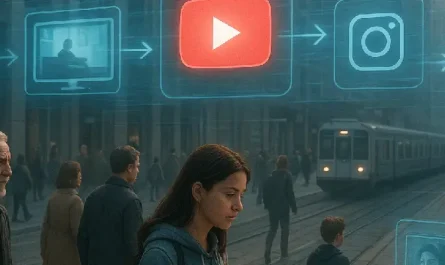
But budgets got tighter, teams got leaner, and social media started demanding content in every format at once. A brand doesn’t just need a poster anymore. They need that same poster to work as a Reel, a Story, a banner ad, and a website header. If you can only do one of those, you’re one piece of a much bigger puzzle.
AI tools have also changed what “basic production work” means. Simple logo variations, templated layouts, and generic animations can now be generated fast. What can’t be automated is the judgment behind the work: knowing why something should look a certain way, how it fits the brand, and how to make it actually connect with people.
How the Industry Has Shifted Over Time
| Before 2018 | The Specialist Era | Designers designed. Animators animated. Roles stayed strictly separate. |
| 2018 – 2024 | The Crossover Period | Tools added animation features. Clients noticed they could brief one person for both. |
| 2025 Onward | The Generalist Normal | Multi-skill portfolios are expected. Clients want end-to-end project ownership, especially knowledge in AI tools . |
The T-Shape Model, and Why It Actually Works
If you’ve spent time in UX or product design circles, you’ve probably heard the term “T-shaped.” It’s a genuinely useful framework for designers and animators thinking about growth.
The idea is simple: You go deep in one skill (the vertical part of the T) and you build working knowledge in a few adjacent areas (the horizontal part). You’re not trying to be an expert at everything; you’re trying to know enough that you can work without constant handoffs.
- Horizontal Skills (The Top): Brand strategy basics, Writing sense, Motion principles, UX fundamentals, Social formats, Reading a brief.
- Vertical Skill (The Base): Your main expertise, e.g., Brand Design or Motion Animation.
For a designer, this could mean getting comfortable with motion understanding timing and easing. For an animator, it might mean developing a stronger sense of brand logic. Neither person becomes the other, but both become much harder to replace.
How to Build This Without Losing Your Footing
The fear is: If I spread too wide, I’ll stop being good at what I’m known for. To avoid this, expand thoughtfully:
- Prioritize Direct Value: Start with the skill that most directly improves your main work.
- Learn by Doing: A course gives you the language; a project gives you the judgment.
- Show the Process: A case study that explains your thinking tells a client more than a polished mockup.
- Collaborate: Work with someone who has a different primary skill. You pick things up faster by watching them solve problems.
“The people holding onto work right now aren’t the ones who know the most tools. They’re the ones who understand the full picture well enough to ask better questions.”
What Your Portfolio Should Actually Show in 2026
A future-proofed portfolio isn’t bigger; it’s more considered. Creative directors spend roughly 90 seconds on a portfolio before deciding. They aren’t just checking your software skills; they’re checking if you think.
The 2026 Portfolio Checklist:
- Clarity: It’s immediately clear what your main skill is.
- Synergy: At least one piece shows design and motion working together.
- Transparency: There is process work, not just finished frames.
- Reasoning: You can explain why you made specific creative choices.
One Honest Thing to Keep in Mind
None of this means you should try to do everything. The “generalist” label is often misread as “masters nothing.”
The ones who thrive know exactly what they are best at, and then choose what to add around it carefully. A motion designer who understands brand systems doesn’t just animate, they animate with intention. That’s the real difference. Not doing more, but understanding more of what you’re already doing.